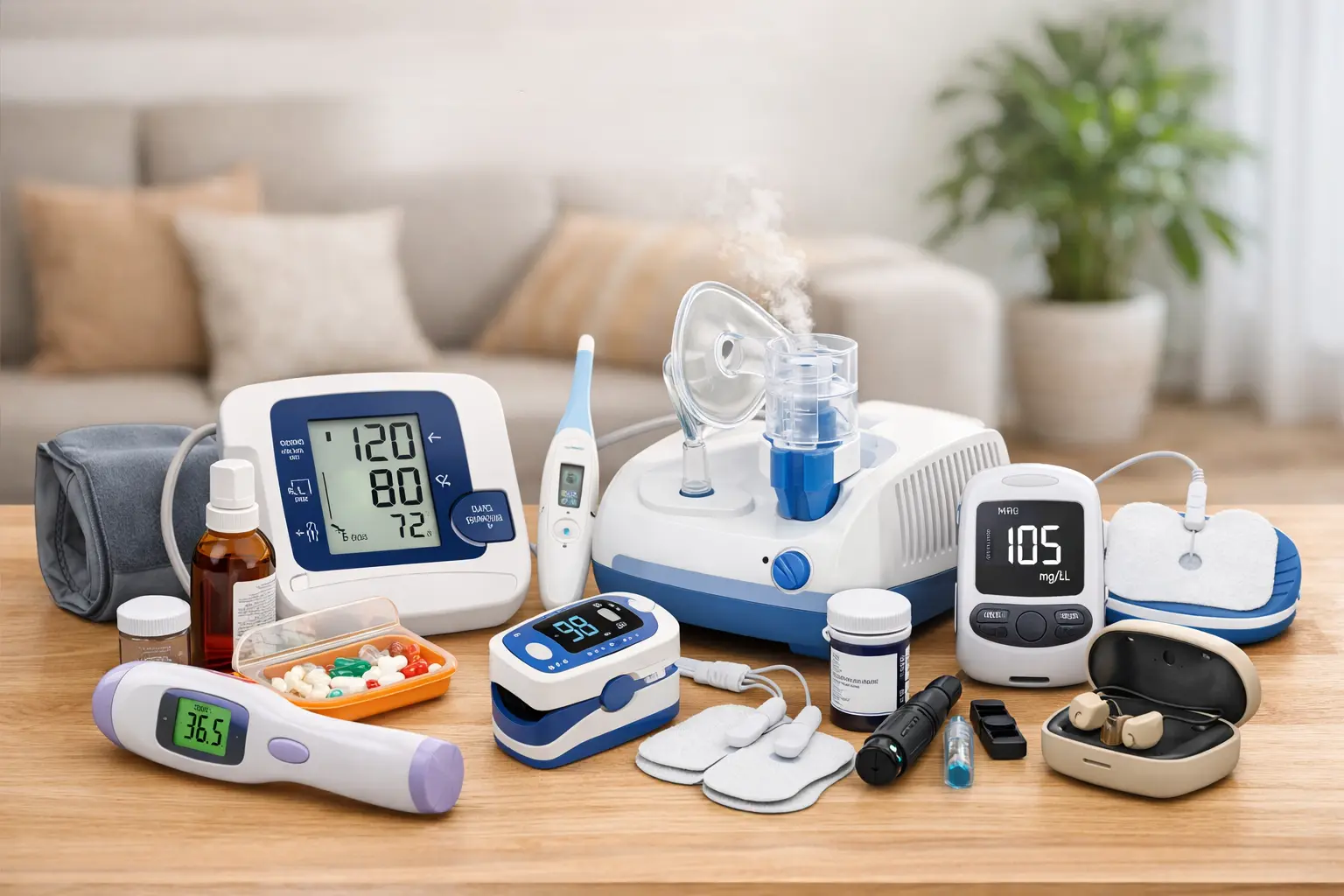
Gone are the days when health monitoring was strictly limited to doctors’ offices and hospitals. With the advancement of compact and user-friendly technology, taking charge of your family’s health at home has never been easier.
Creating a “smart health kit” at home allows you to track vital signs, detect early symptoms, and manage chronic conditions effectively. At Kokand, we recommend equipping your household with these five essential medical devices to ensure safety and peace of mind.
1. Digital Blood Pressure Monitor
Hypertension (high blood pressure) is often called the “silent killer” because it rarely shows obvious symptoms until it is too late. Having a digital BP monitor at home is crucial, especially if you have elderly family members or anyone with heart concerns.
- Why you need it: Regular monitoring helps track blood pressure trends that a single doctor’s visit might miss.
- Tip: Look for a device with a large digital display and a memory function to store previous readings for your doctor to review.
2. Pulse Oximeter
This small, clip-like device became a household necessity during the global pandemic, but its importance remains high. It measures the oxygen saturation level (SpO2) in your blood along with your pulse rate.
- Why you need it: It is vital for monitoring anyone with respiratory issues like asthma, COPD, or recovering from the flu. A significant drop in oxygen levels is often an early sign of respiratory distress that requires immediate medical attention.
3. Infrared Thermometer (Non-Contact)
Old-fashioned mercury thermometers are fragile and slow. Infrared thermometers are the modern standard for safety, speed, and hygiene.
- Why you need it: They allow you to check the temperature of a sleeping child or multiple family members quickly without physical contact. This reduces the risk of spreading infections between family members during a fever.
4. Glucometer (Blood Sugar Monitor)
For households managing diabetes, a glucometer is not optional—it is a lifeline. However, even for non-diabetics, occasional checks can help in the early detection of blood sugar irregularities or pre-diabetes.
- Why you need it: Modern glucometers provided by Kokand are minimally invasive, require only a tiny drop of blood, and give results in seconds, helping you make better dietary choices.
5. Portable Nebulizer
Respiratory issues caused by allergies, pollution, or seasonal changes are becoming increasingly common. A nebulizer converts liquid medicine into a fine mist that is easily inhaled deep into the lungs.
- Why you need it: It provides immediate and effective relief during an asthma attack or severe chest congestion, making it a must-have for families with young children or seniors who struggle with inhalers.
Take Control of Your Health Today
Having these devices at arm’s reach can save precious time during a medical emergency. However, owning the equipment is only half the battle; ensuring they are accurate is equally important. Always choose FDA-approved or clinically tested devices to ensure the data you rely on is correct.
Ready to build your home health kit? Visit Kokand.org today to shop our curated collection of reliable, high-quality home medical equipment.
Frequently Asked Questions (FAQs)
Q1: Are home medical devices as accurate as the ones used in hospitals? A: Yes, modern home medical devices are designed to be highly accurate. However, it is essential to buy clinically validated products from trusted suppliers like Kokand. Also, following the user manual correctly is key to getting precise readings.
Q2: How often should I replace my home medical equipment? A: Most digital devices like BP monitors and glucometers last for 3 to 5 years with proper care. However, accessories like cuffs, batteries, or glucometer strips need to be replaced more frequently. Always check the manufacturer’s warranty for specific details.
Q3: Do I need a doctor’s prescription to buy these devices? A: No, devices like blood pressure monitors, thermometers, nebulizers, and pulse oximeters are over-the-counter products and do not require a prescription. However, we always recommend consulting your doctor regarding the results they provide.
Q4: Can a pulse oximeter be used on children? A: Standard pulse oximeters are designed for adult fingers. For accurate readings on small children or infants, it is recommended to buy a pediatric pulse oximeter which is specifically designed for smaller fingers.
Q5: What should I do if my device shows an error message? A: First, replace the batteries, as low power is the most common cause of errors. If the issue persists, refer to the user manual provided with the product or contact Kokand’s customer support for troubleshooting assistance.